

A consumer television designed for a few hours of evening viewing will show uneven backlight dimming and noticeable colour shift within 18 months of 18-hour daily use. That is a visible problem in a reception area the moment it starts, and a warranty problem a month later when the supplier points out that the panel was never rated for that kind of load.
For a specifier or procurement lead, the right brief is not "a screen for the venue." It is three or four different briefs wearing the same word. A reception welcome wall, a restaurant menu board, a function-centre wayfinding system and an outdoor bar menu have almost nothing in common at a specification level. Getting the spec right for each location is what keeps the fit-out on budget for the next five to seven years.
Where hospitality digital signage earns its place
Hospitality digital signage is not a single product category. It is a set of applications, each with its own purpose, audience and environmental load. The common ones:
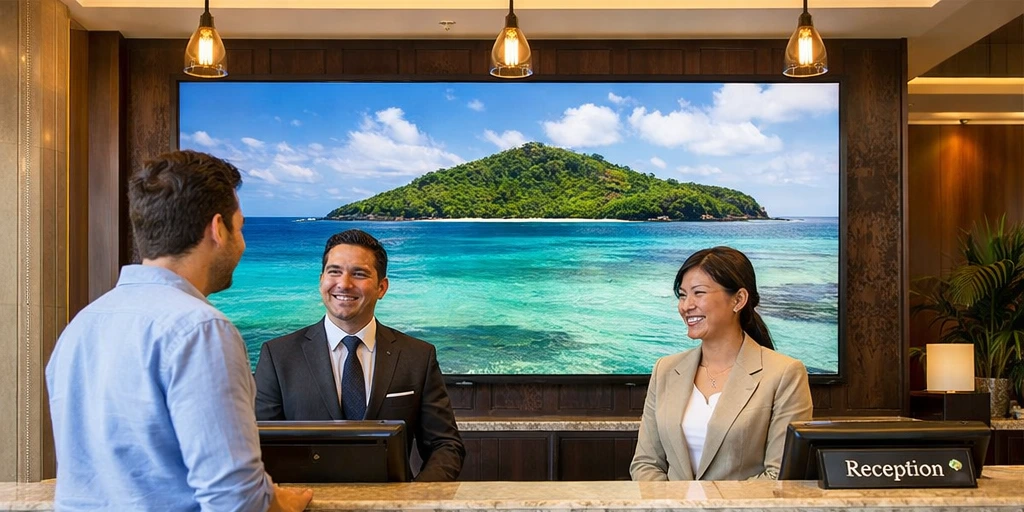
- Reception and welcome walls. Large-format displays, typically 55 to 86 inches, in the arrivals lobby. Rotating welcome content, event information and wayfinding for guests who have just walked in with luggage.
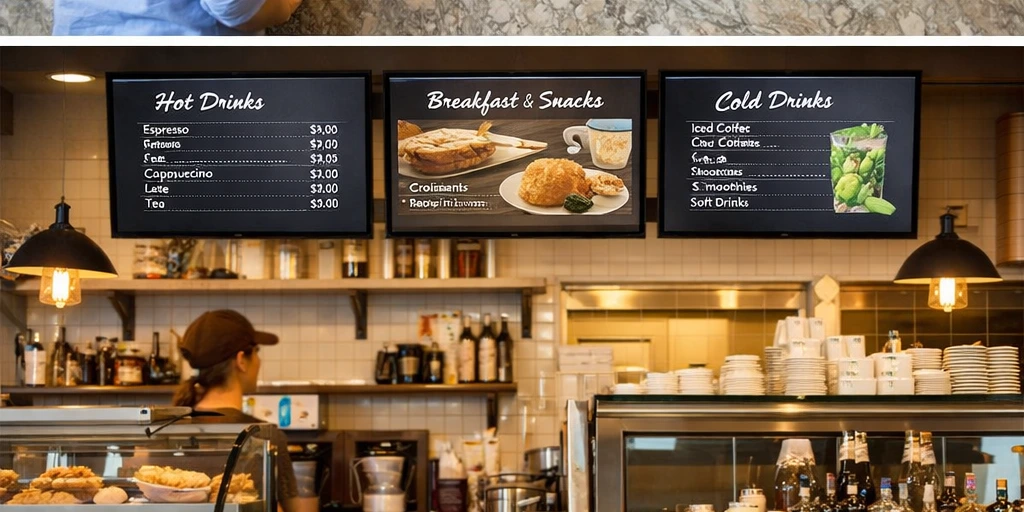
- Restaurant menu boards. Indoor displays behind the counter or along a wall, used for full menus, daily specials and drink listings. Usually run continuously through trading hours.
- Bar pricing and drinks gallery displays. Smaller formats behind the bar or over a back-bar display, often in portrait orientation to match drink listings.
- Function-centre wayfinding. Displays at lift lobbies, entry points and corridor junctions directing guests to the right room for a conference, wedding or corporate event.
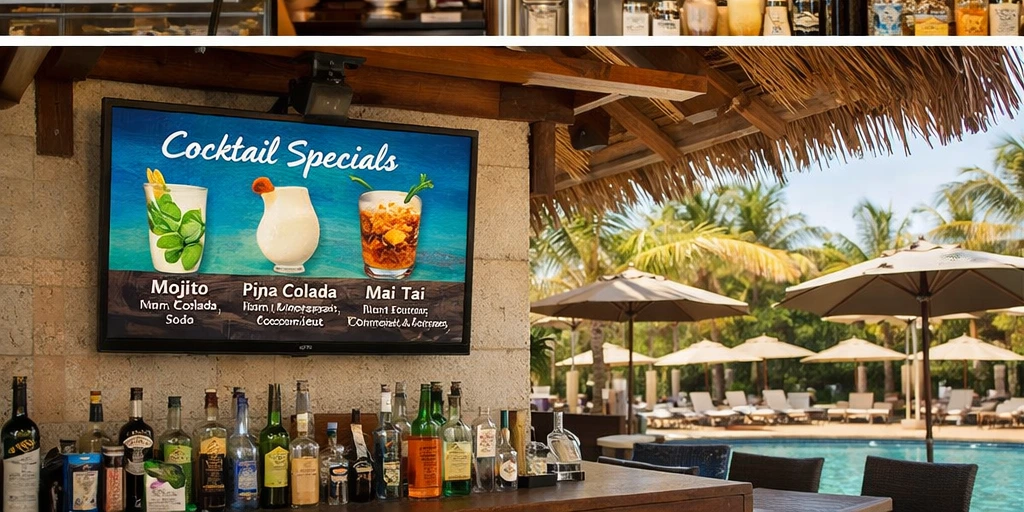
- Poolside and outdoor bar menus. Outdoor-rated displays for alfresco dining, beer gardens and resort pool areas. These sit in the hardest environment in the building.
- Meeting and function room status displays. Small displays beside meeting-room doors showing the current and upcoming bookings for that room.
Each of these is a separate specification problem. A 400-nit reception screen that works well in a lobby will be unreadable in a sun-washed cafe off a Melbourne laneway. A consumer-grade 65-inch display that handles the main menu board will not survive the humidity and temperature swing of the pool bar.
What hospitality does to consumer-grade screens
Consumer televisions are built for a household pattern of use: four to six hours a day, dim ambient light, stable room temperature, rarely cleaned, replaced after seven years. Hospitality use breaks almost every one of those assumptions.
Run time and panel fatigue
A reception screen running from 6am to midnight is doing 18 hours a day. Over a year, that is more than 6,500 hours, well past what consumer panel manufacturers design for. Backlights dim unevenly, whites start to look yellow, and by 12 to 18 months the display that was a crisp brand statement on day one looks tired.
Static content and burn-in
Menu boards and wayfinding displays often hold the same logo, header bar or price panel in the same position for months. On consumer-grade LCD and OLED panels, static elements cause image retention that becomes permanent burn-in. Commercial displays include panel-protection features such as pixel shifting, sub-pixel refresh and scheduled off-hours that most consumer sets do not have.
Heat and humidity
A screen mounted near a commercial kitchen pass, or behind a bar where the glasswasher exhausts steam, sits in a thermal environment consumer electronics are not rated for. The failure mode is usually capacitor degradation or screen delamination in the corners within two to three years.
Public handling
Hospitality displays get bumped by trolleys, cleaned with spray bottles, touched by guests who should not be touching them, and occasionally kicked. Commercial displays have rigid bezels, stronger mounting points, and where touch is specified, toughened glass rated for public use.
Specifications that matter for hospitality installs
The specification that matters depends on the application. The table below outlines the core requirements across the four most common hospitality environments.
| Environment | Brightness (nits) | 24/7 panel rating | IP rating | Notable specs |
|---|---|---|---|---|
| Indoor reception lobby | 400–500 | Recommended | Not required | Anti-glare coating if facing a glass frontage |
| Indoor menu board | 400–500 | Required | Not required | Wide viewing angle for queue lines |
| Function-centre wayfinding | 400–500 | Required | Not required | Portrait-capable mounting, remote management |
| Outdoor or sun-lit alfresco | 2,500–5,000 | Required | IP55 to IP65 | Operating temperature to 50°C, auto-brightness |
A few of these specifications need plain-English unpacking.
Brightness (nits). 400 nits is a comfortable indoor display brightness. 2,500 nits is roughly what you need to stay readable in direct afternoon sun. 5,000 nits is the top end, reserved for west-facing windows at 2pm in summer. Under-speccing brightness is the most common mistake in hospitality signage, and the only fix after installation is replacement.
24/7 panel rating. A commercial panel rated for continuous operation. Consumer panels are usually rated for 12 to 16 hours a day. Running a consumer panel in a 24/7 application voids the warranty and typically halves the useful life.
IP rating. IP55 tolerates dust and low-pressure water spray, which is enough for a covered alfresco area. IP65 tolerates heavier weather exposure for open-sided beer gardens and uncovered poolside installations. Neither rating covers the high-pressure water jets used in some back-of-house cleaning.
Anti-glare coating. Matters for displays positioned opposite windows or under downlights. Without it, reflected glare makes content unreadable from a common viewing distance even when the panel's own brightness is adequate.
Multi-site content management for hotel groups and franchise venues
A single venue can run one or two displays on a USB stick with scheduled content. A 30-site hotel group or a national restaurant chain needs something else entirely. This is where hotel digital signage and digital signage for restaurants stop being hardware problems and start being software problems.
What procurement needs to specify is the content management system (CMS), not just the displays. The key capabilities:
- Centralised content push. Head office uploads a new menu or campaign; every site updates within minutes without local intervention.
- Daypart scheduling. Breakfast menus switch to lunch at 10.30am, lunch switches to dinner at 4pm, across all sites simultaneously.
- Regional and site-specific overrides. Melbourne venues can run a state-specific AFL promotion while Sydney sites run a different overlay.
- Content compliance auditing. A reporting function that confirms every screen is showing the correct content at the correct time, with remote screenshots available if there is a compliance query.
- User permissions. Head office marketing holds publishing rights; venue managers can approve or flag local-only content without editing brand-compliance assets.
A well-matched display and CMS combination reduces the operational cost of a network significantly, because the alternative (emailing PDFs to venue managers and hoping they swap the USB stick) fails at scale.
Procurement considerations for hospitality fit-outs
A few practical specifications beyond the display itself.
Warranty terms. Commercial displays typically carry a three-year on-site warranty in Australia. A consumer television carries one year return-to-base. The difference matters when a display fails in a prominent reception area and needs replacement within 48 hours. [VERIFY warranty terms against current partner brand warranty statements].
On-site replacement lead times. For a multi-site rollout, confirm the supplier holds enough local stock of the specified model to handle warranty replacements without air-freighting from Asia. Manuco has distributed commercial displays in Australia since 1987 and holds partner brand stock in Thomastown, which means most replacements ship the same day within metropolitan Melbourne.
Matched hardware across sites. For chains, specify one display model across all locations where practical. Mixed model numbers create compatibility issues with the CMS, uneven brightness and colour reproduction across the network, and a longer parts list to maintain.
Lead times for staged rollouts. Large hospitality groups usually stage refits over 12 to 18 months. Lock in stock allocation at the start of the project. A display model discontinued halfway through a rollout creates a visible mismatch between early and late sites.
Installation scheduling. Hospitality venues trade around the clock. Most installations happen between 10pm and 6am, which affects both the installation quote and the lead time on contractor availability.
Next step
Hospitality digital signage covers more ground than most procurement briefs assume. A reception screen, a menu board, a function-centre wayfinding display and a poolside bar menu are four different procurement problems, and specifying them as one invites the kind of under-spec that fails inside the warranty period.
The practical next step for a venue planning a refit or a new site is a specification review: a walkthrough of the planned locations against the environmental load, viewing distances and content-management requirements at each screen. That review is where most of the cost decisions get made, and it happens before a single purchase order is raised. Call Manuco on 03 9480 0555 or email info@manuco.com.au to book a site review with a specifier who works across the full partner brand range.