

They turn on, show content, and meet basic size and resolution requirements. Over time, however, many organisations discover that the lowest upfront cost often leads to higher overall expense.
In commercial signage, cost should be measured across the full lifecycle of the display, not just the purchase price. Maintenance, downtime, replacement frequency, and operational disruption all contribute to the real cost of ownership. Displays that are cheaper to buy are often more expensive to keep running.
Indoor and outdoor displays are built for different conditions
The most important distinction between indoor and outdoor signage is the environment the display must operate in over time.
- controlled temperatures
- stable lighting conditions
- limited exposure to dust and moisture
- extended daily use rather than constant operation
- direct sunlight and glare
- wide temperature fluctuations
- rain, dust, and airborne particles
- continuous or near continuous operation
- limited access for servicing
Brightness requirements change dramatically outdoors
Indoor signage prioritises clarity and colour accuracy under artificial lighting. Outdoor signage must remain readable in full daylight.
Indoor displays generally operate at brightness levels suitable for offices, retail interiors, and hospitality venues. Outdoor displays require much higher brightness to overcome sunlight and reflections.
This higher brightness has implications for:
-
power consumption
-
heat generation
-
component selection
-
enclosure ventilation and sealing
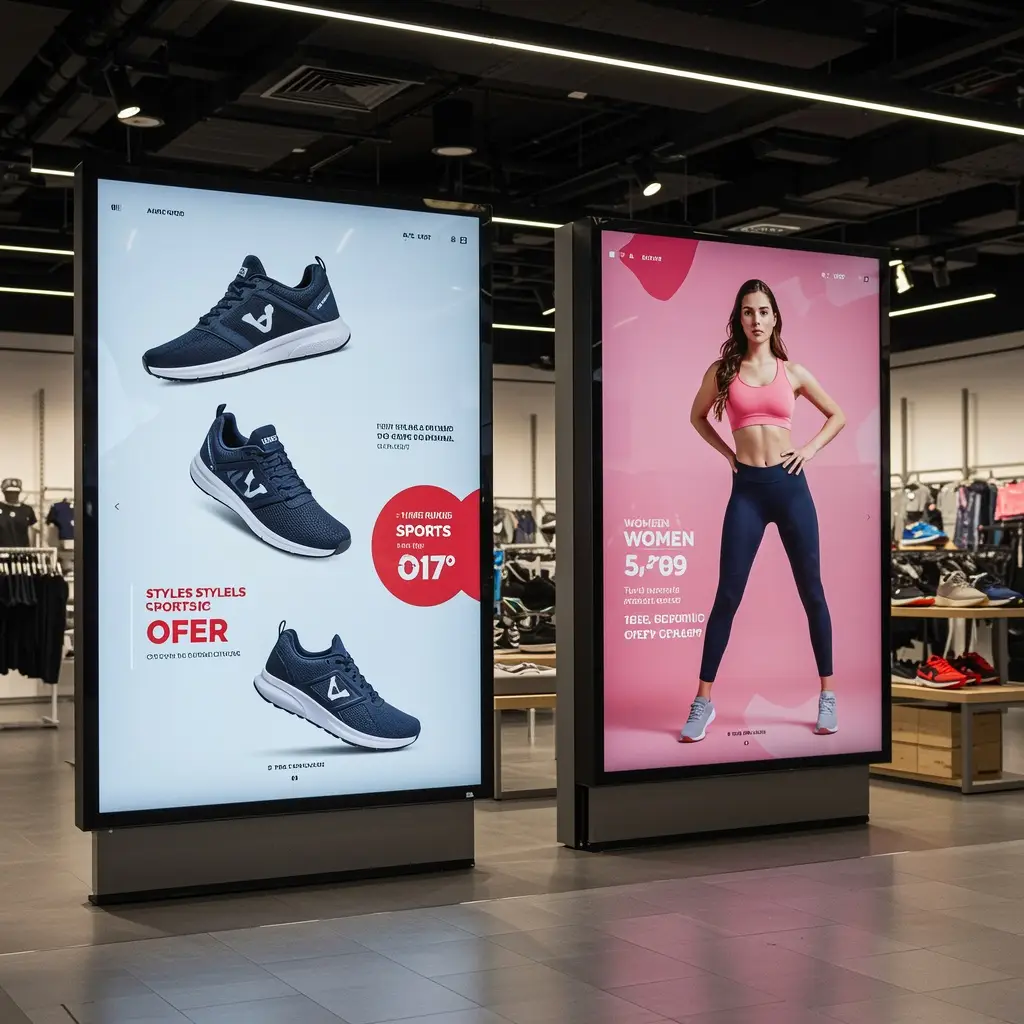
Enclosures and protection are not optional outdoors
Indoor displays usually rely on their surroundings for protection. Outdoor displays must protect themselves.
Outdoor signage typically requires:
-
weather resistant enclosures
-
protection against dust and moisture
-
designs that prevent condensation
-
materials resistant to corrosion and UV exposure
Duty cycle expectations differ s rarely cheap
Indoor signage may operate for long hours each day, but it is often powered down overnight. Outdoor signage and kiosks are commonly expected to run continuously.
Displays designed for continuous operation are built with:
-
components rated for sustained electrical load
-
thermal designs that assume constant heat generation
-
predictable performance over longer lifecycles
Service access matters more outdoors
Indoor displays are usually easy to access. Outdoor displays are not.
Outdoor signage and kiosks are often installed in public or exposed locations where servicing requires planning, permits, or specialised access. Displays specified for these environments need to be serviceable without full removal or extensive downtime.
This is why outdoor signage is often treated as a system rather than a standalone screen.
Where kiosks fit into the decision
Kiosks sit at the intersection of indoor and outdoor signage. Some are installed indoors, others outdoors, but all share common challenges.
Kiosk displays typically require:
-
extended or continuous operation
-
high durability
-
integration with touch, compute, and enclosure systems
-
predictable servicing

These requirements often align more closely with outdoor or commercial grade displays, even when kiosks are installed indoors.
Manuco’s outdoor kiosk range reflects this system based approach, where the display is selected as part of a broader solution rather than as a single component:
https://www.manuco.com.au/product-category/outdoor-lcd-signage/kiosks/
Indoor displays still play a critical role
-
environments are controlled
-
presentation quality is a priority
-
glare and sunlight are minimal
-
access for maintenance is easy
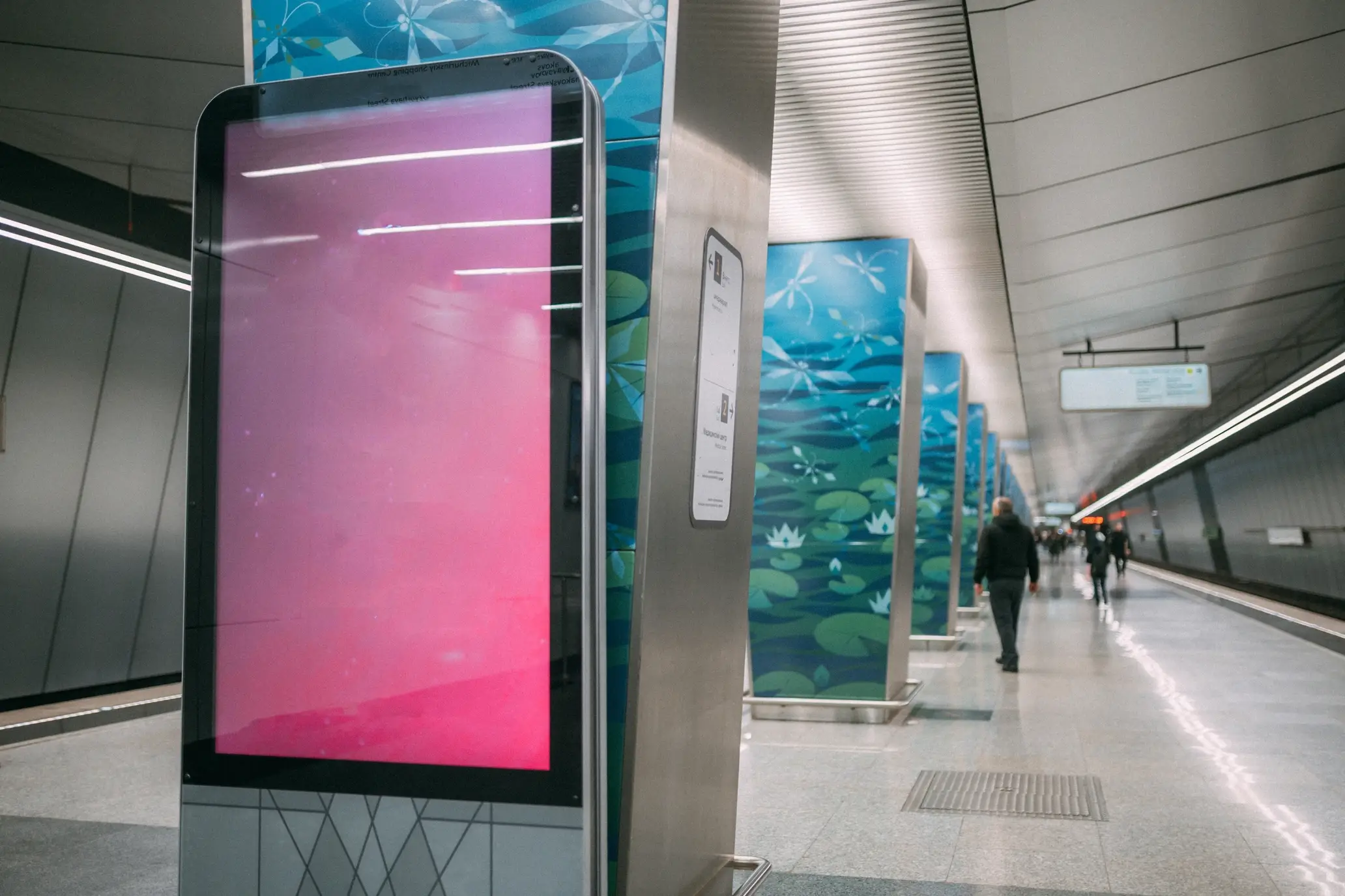
Making the right choice early reduces cost later
Many signage issues arise when displays are repurposed beyond their intended environment. Choosing the right display type at the start reduces the likelihood of:
-
visibility complaints
-
premature replacement
-
unexpected maintenance costs
-
inconsistent performance across sites
Matching environment to engineering
Successful digital signage projects start with a clear understanding of where and how the display will be used. Indoor and outdoor displays exist because different environments demand different engineering responses.
By selecting displays that are designed for their operating conditions, organisations reduce risk, improve reliability, and protect their investment over time.
FAQ about Indoor v Outdoor Displays
Indoor displays are not designed for exposure to sunlight, temperature variation, moisture, or dust. Even short term outdoor use often leads to visibility issues and accelerated wear. For reliable performance, displays should be matched to the environment they will operate in.
Outdoor displays are engineered for harsh conditions, but they are not always necessary. In controlled indoor environments, outdoor displays can add unnecessary cost and complexity without delivering additional benefit.
The most common risk is premature failure. Displays specified for the wrong environment often experience brightness loss, overheating, or inconsistent performance over time.
Many kiosks operate for long hours and are enclosed, which increases heat and limits airflow. Even when installed indoors, kiosk displays often need commercial or outdoor grade characteristics to remain reliable.
Outdoor environments require significantly higher brightness to overcome sunlight. Using an indoor display outdoors usually results in poor readability and faster degradation of the panel.
Custom solutions are most appropriate when standard indoor or outdoor displays cannot meet environmental, integration, or serviceability requirements across the full lifecycle of the project.