

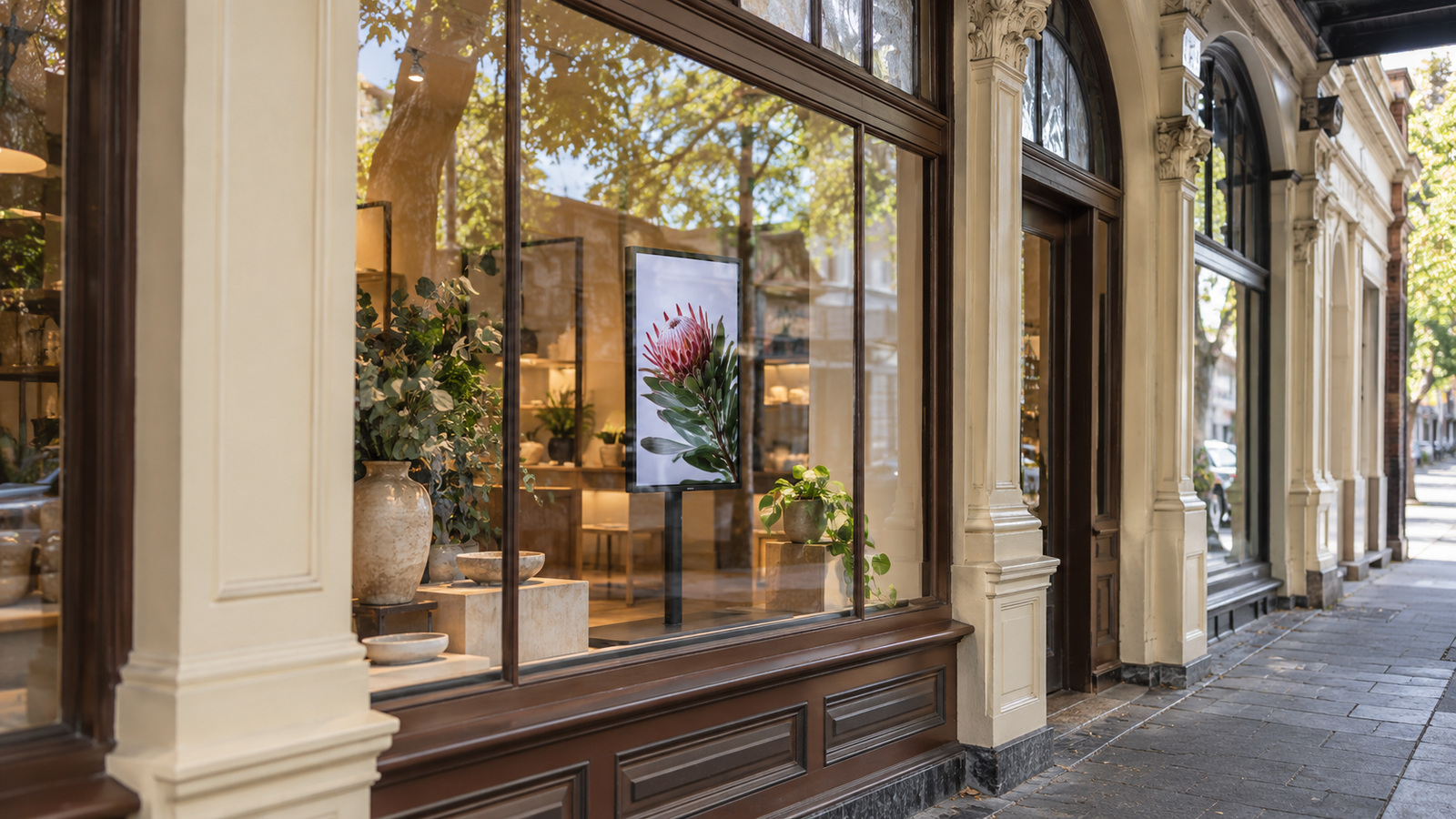
A digital sign may be possible on a Victorian heritage shopfront, but its size, position, illumination and effect on the place need assessment. A screen that fits the window can still conceal significant details or dominate the frontage. A reversible mounting method does not establish permission to install it.
For a property manager or AV integrator, the useful starting point is the building and its heritage controls. Work out what must remain visible and intact, then consider whether a display can serve the business within those constraints. Approval of a sign and selection of suitable hardware are separate decisions.
Find out which heritage protection applies

Start with the exact property, rather than its age or the appearance of neighbouring buildings. Victoria’s planning property report shows the zone, planning overlays and whether a property is included on the Victorian Heritage Register. Follow the links to the applicable scheme and investigate the heritage listing itself.
Local and state heritage protection have different approval arrangements. Councils make decisions about changes to locally significant places covered by a Heritage Overlay. Heritage Victoria administers heritage approvals for state-significant places on the Victorian Heritage Register.
Clause 43.01 generally requires a permit to construct or display a sign in a Heritage Overlay, subject to applicable exemptions. It also treats development of registered places differently: the Heritage Act pathway applies, and the overlay exempts that development apart from subdivision. Other relevant planning controls still need checking. Do not assume every heritage project needs the same pair of permits.
The broader rules for Victorian digital-sign permits cover sign categories and other planning triggers. For a heritage shopfront, establish the heritage route as well. Ask the council or Heritage Victoria, as applicable, to confirm how the actual proposal should be assessed before committing to installation.
Identify what the shopfront contributes
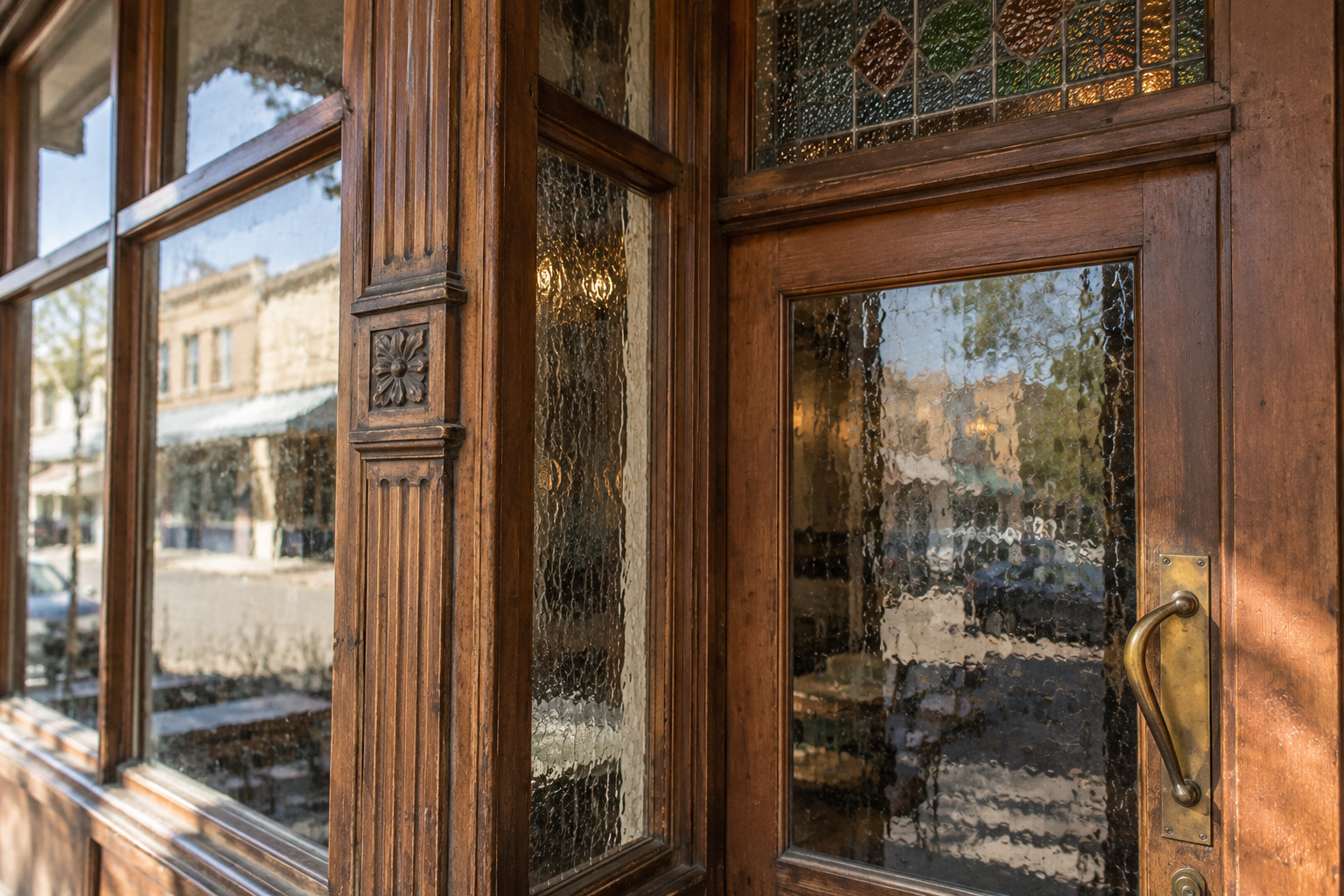
Read the applicable statement of significance, heritage study and local design guidance before drawing a rectangle over a photograph. These explain why the place matters and which features contribute to that significance. The important feature may be original glazing, the arrangement of windows and doors, decorative details or a surviving historic sign.
Clause 43.01’s decision guidelines ask whether a proposed sign adversely affects the significance, character or appearance of the heritage place. They also direct attention to relevant statements of significance and heritage design guidelines. Matching the business’s branding colours does not answer those questions.
Record the frontage as it is now. Include the whole elevation and street views, rather than only the patch where the screen would sit. This helps the design team distinguish a display that occupies a later infill panel from one that conceals significant fabric. Neither location is automatically acceptable; the distinction needs evidence from that place.
If the listing covers a precinct, investigate how the shopfront contributes to that wider setting. A contemporary tenancy fitout does not, by itself, settle the effect of a screen on views from the street.
Keep the building visible around the display

A screen’s visual impact extends beyond the illuminated image. Its enclosure, supports and position can interrupt the proportions of a shopfront even when it is switched off. Consider what a person sees from across the street and along the footpath, including oblique views.
Port Phillip’s heritage policy provides a local example. It encourages conserving historic signs and placing new signs in traditional locations. It seeks to avoid visually dominant signs and signs that damage or conceal significant features. It also seeks to avoid animated, electronic or floodlit signs unless they are consistent with the place’s significance.
That is a policy for Port Phillip, rather than a statewide ban or a promise that one preferred position will be approved. Read the policy for the actual municipality.
Compare possible layouts against the features identified in the heritage assessment:
| Design option | Heritage question to investigate |
|---|---|
| A screen filling a window bay | What glazing, framing or views would the screen and enclosure conceal? |
| A smaller display within the bay | Does the surrounding space keep significant proportions and details visible? |
| A display farther inside the tenancy | How does its visibility from the street change, including when illuminated? |
These are design comparisons, not approved solutions. If the digital format cannot sit comfortably with the place, another communication method may be the better option. General retail display selection can then address the technical needs of a position that the project can pursue.
Behind glass does not automatically mean exempt
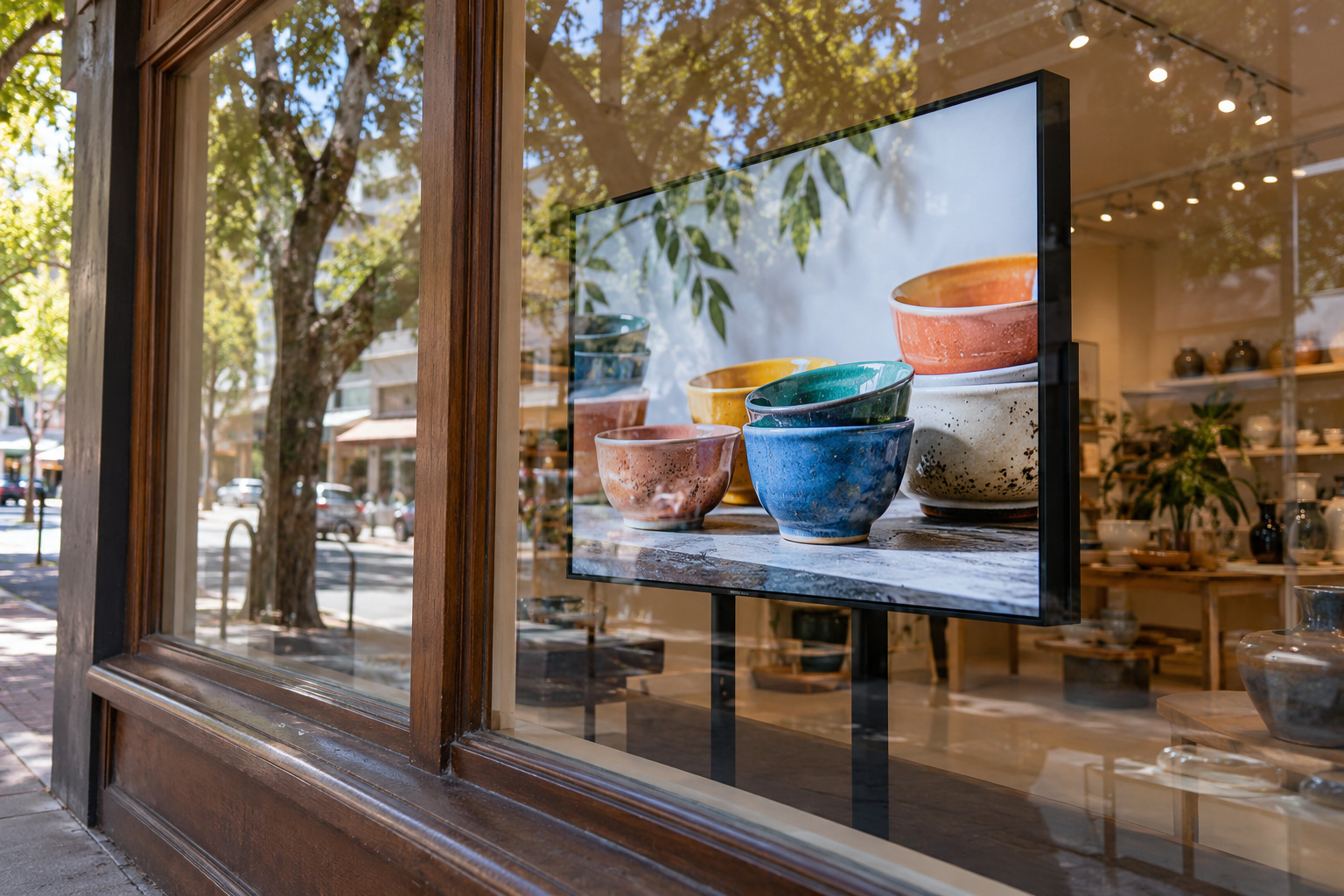
Moving a screen inside the window does not necessarily remove the signage question. Clause 52.05-10 includes an exemption for an internal sign that cannot generally be seen outside. A screen intended to advertise to people on the street does not meet that description simply because glass separates it from them.
Equally, avoid assuming that every internal screen needs a signage permit. A genuinely internal display may meet the exemption. The sign’s actual visibility matters, and any associated alterations or works need their own consideration. The planning-scheme exemption does not determine a separate Heritage Act requirement for a registered place.
Keeping one image still does not stop an electronically updateable screen being an electronic sign under the planning definitions. Changing the content strategy may reduce visual impact, but it is not a way to assume a different approval route.
Indoor and outdoor display requirements remain a separate technical question. A window position can involve glare and solar exposure even though the panel is inside. Assess those conditions without treating a high-brightness specification as evidence of heritage acceptability.
Assess the fixings as well as the screen
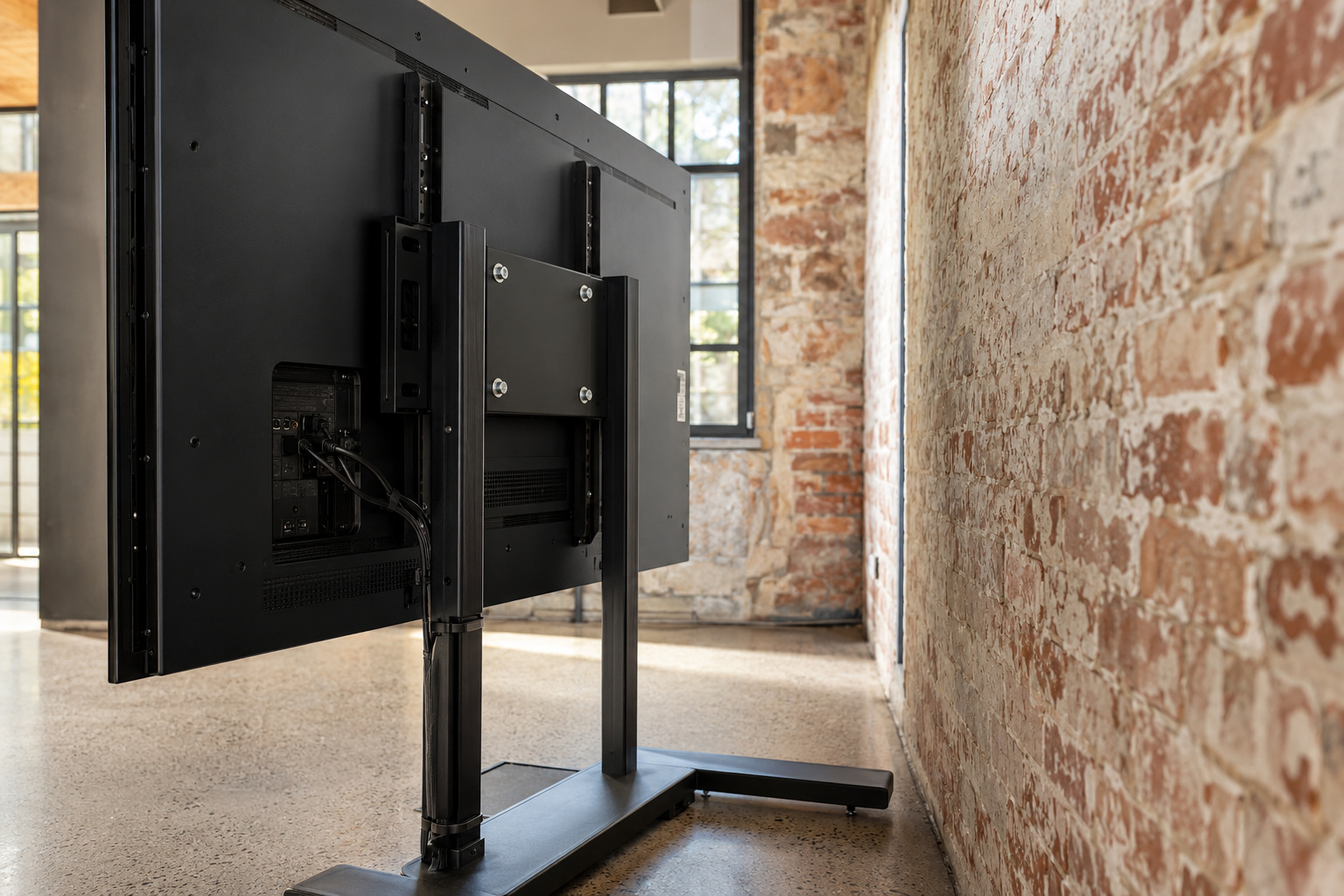
The proposal needs to explain what touches the building, what is concealed and what remains after removal. A slim screen may still need substantial supports, a cabinet, ventilation openings or new cable routes. Include those parts when considering the effect on significant materials and finishes.
For registered places, Heritage Victoria’s permit-exemption application guidance specifically asks for existing signage, proposed locations, dimensions and materials, whether signs are illuminated or digital, and how they will be fixed. Those details help explain the proposed change; submitting them does not establish eligibility for an exemption.
Describe a supposedly reversible installation precisely. A removable bracket may still leave holes or damage when taken away. The heritage practitioner and installation designer need to assess the actual material, fixing method and removal work, rather than rely on the word reversible.
Heritage Victoria provides general and place-specific exemptions, with specific exemptions prevailing where they conflict. Read the full applicable conditions before relying on one. A heading for signage or temporary works is insufficient evidence that a digital installation is covered. Where the route is uncertain, resolve it with the authority before work starts.
Select hardware for the design that is approved
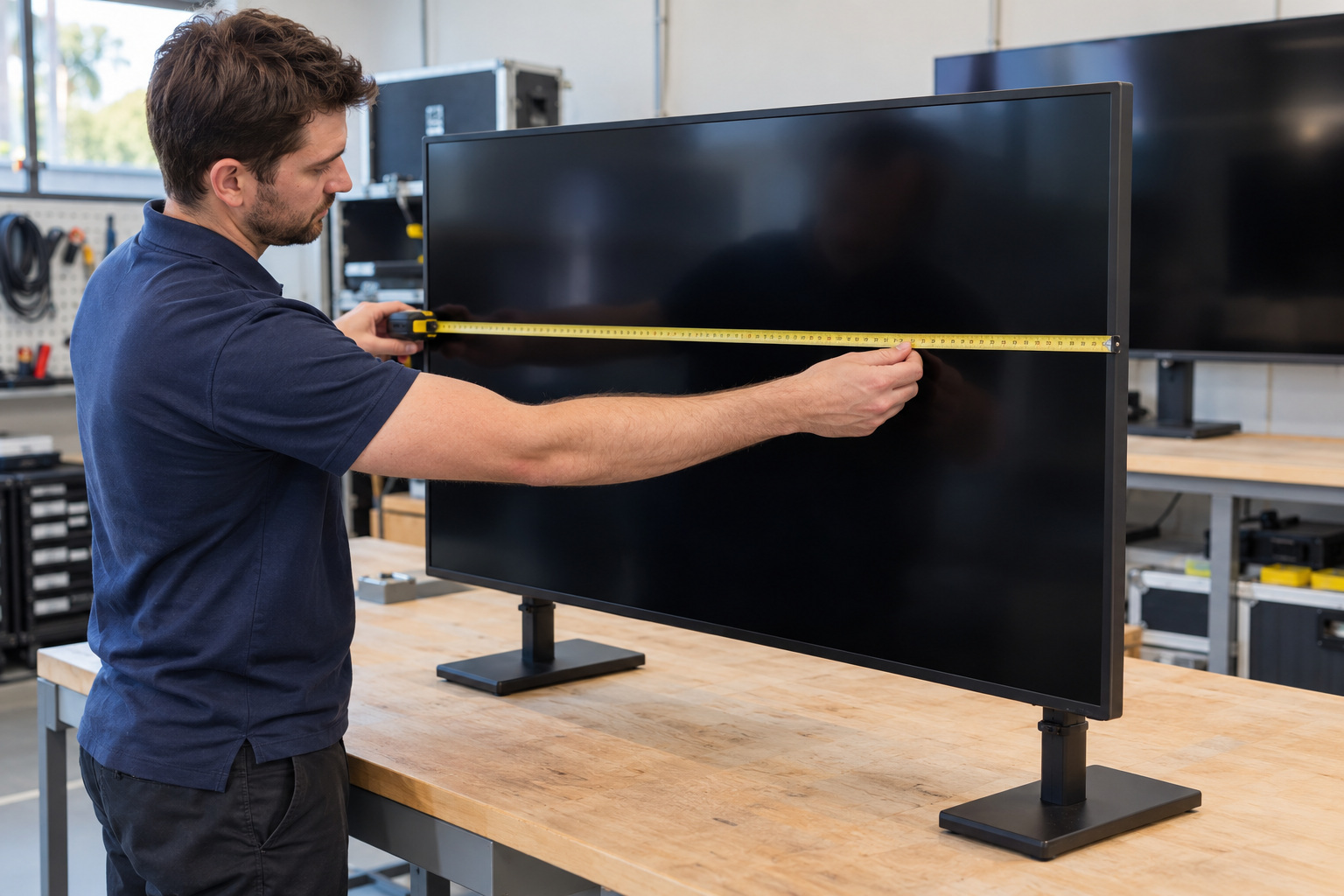
Once the position and operating conditions are settled, compare outdoor display options or suitable indoor hardware against that actual design. Check the complete enclosure dimensions, mounting arrangement and required access, rather than only the visible screen diagonal. A substitute unit can change the appearance even when its image size is similar.
The proposed system also needs to support any specified illumination, content and operating-hour conditions. Automatic brightness control on a product page does not establish that a particular model can deliver the approved settings. Ask for applicable product information and resolve any lighting-assessment requirements with the project adviser.
Keep responsibility for later content changes clear. Someone changing an image or schedule needs to know the conditions that govern the installation. A hardware feature is useful only if the installed system is configured and operated accordingly.
We supply commercial display hardware from Thomastown. When you discuss the project with us, share the proposed location and any established design or operating constraints so we can discuss product options. Confirm heritage and planning permissions with the relevant authority and your advisers. This is general information, not a determination for a particular property.